
Before attending UT Austin as a postdoctoral fellow, Khamron Micheals was a respiratory therapist at the bedside of critically ill patients in the Texas Medical Center. While caring for patients on the front lines, Micheals was also learning about the broader systems, such as housing, income and access to care, that influence sickness and recovery time.
Now a postdoctoral fellow in UT’s School of Social Work and Dell Medical School, Micheals’ current research focuses on understanding why some children experience worse asthma outcomes than their peers.
Micheals took some time out of his schedule to talk with the Graduate School about his research.
Can you explain the key findings of your research?
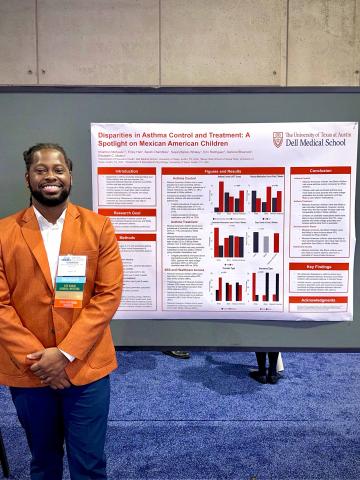
My current project asks whether Mexican American children with persistent asthma experience differences in asthma control and treatment compared to non-Hispanic White children, and whether socioeconomic or healthcare access factors explain those differences.
I use national and local health data to explore how differences in medical treatment, lung testing and social factors contribute to these gaps. I use data from the Texas Home Assessment of Asthma and Lung Exposures (TexHALE) study, a community-based cohort led by Dr. Elizabeth Matsui that collects detailed clinical, social and environmental information on children with asthma.
I apply epidemiologic methods and statistical modeling to examine outcomes. Models are adjusted for socioeconomic and healthcare access factors, including household income, parental education, insurance type, provider type and transportation barriers. I examine areas such as asthma control using the Asthma Control Test score, lung function measures using spirometry and treatment using controller medication use. I also apply artificial intelligence tools to help predict and identify which children are at higher risk for lung diseases, with the goal of ensuring they get the care they need earlier.
Our findings revealed that Mexican American children were significantly less likely than non-Hispanic White children to have well-controlled asthma and to use controller medications within the past two weeks. These disparities persisted even after accounting for socioeconomic and healthcare access factors, though the associations were somewhat attenuated. The findings suggest that broader systemic issues, such as cultural barriers, discrimination or provider practices likely contribute to these inequities.
What attracted you to studying this field?
I have wanted to work in healthcare since childhood. Before pursuing a PhD and postdoctoral training, I worked as a respiratory therapist, caring for patients with severe pulmonary diseases. That clinical experience exposed me to the realities of unequal health outcomes long before I began studying them formally.
That perspective carried into my doctoral training, where my dissertation examined the impact of COVID-19 across populations and found disparities by race and ethnicity. I studied differences in hospitalization and mortality, but quickly saw the limitations of existing data, which often lacked the detail needed to capture the social and structural drivers behind these disparities. This gap between what we observe clinically and what we can measure pushed me further toward data-driven population health research.
Now, as a postdoctoral fellow, I focus on cardiopulmonary health disparities in children, particularly asthma outcomes among historically marginalized youth. I use real-world data to uncover hidden patterns of inequity and guide interventions that are both evidence-based and equity-focused. This work is deeply informed by my experiences at the bedside, in the classroom and during my doctoral research.
Inspired by W.E.B. Du Bois’ framing that health inequities stem from social and structural conditions rather than biology, I aim to ensure that the tools we use to measure lung function do not reinforce disparities but instead move us closer to equity in care. One project where this comes into sharp focus is my research on pediatric asthma in Central Texas.

Why did you choose to be a postdoc at UT?
I chose UT because the work, mentorship and community aligned closely with my values and long-term goals.
UT offered an environment where I could bridge clinical experience, public health training and data science to address real-world health inequities. The collaborative ecosystem at Dell Medical School and the School of Social Work has been an ideal place to grow as a researcher committed to advancing health equity for underserved populations.
While I won’t get a degree to hang on the wall or a UT ring to wear, I will leave with the knowledge, skills and perspective that will guide my work and deepen my impact for years to come.
How has UT helped you further your interests and goals?
Most importantly, UT has taught me how to think like a scholar. I have always been a hard worker, but this environment encouraged me to slow down, ask deeper questions and approach problems with intellectual curiosity and rigor. That shift from simply producing work to deeply engaging in critical thought has shaped both my research and my long-term vision for impact.
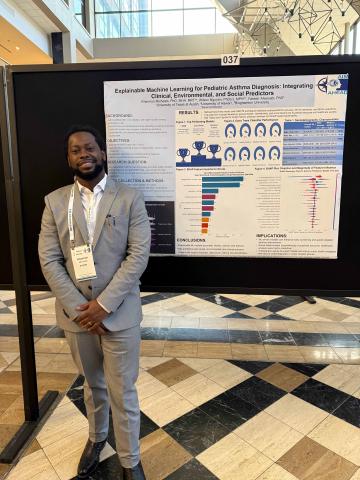
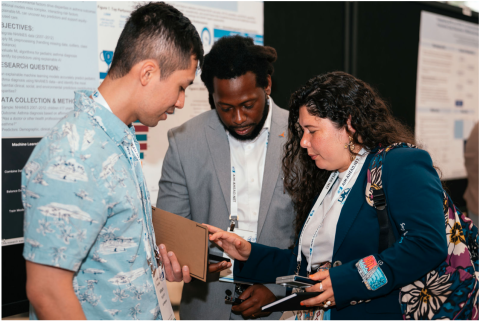
UT has provided world-class mentorship, strong research infrastructure and interdisciplinary training that have been essential to my development. UT fosters a truly collaborative and supportive environment, and my mentors are deeply invested in my growth both professionally and personally. Through my fellowship, I have had opportunities to publish, present at national conferences and contribute to culturally tailored research serving the communities I care about most.
Can you share a favorite memory from your time as a postdoctoral fellow?
One of my favorite memories from my postdoctoral fellowship was co-moderating the Spring Ethics Seminar through the School of Social Work, including the Responsible Conduct of Research session focused on lessons learned from working with marginalized populations. Helping guide a conversation that bridged research ethics, community trust, and the implications of data-driven and AI-enabled health research was deeply meaningful to me. The experience reinforced the responsibility researchers have not only to generate knowledge, but to ensure that emerging tools like AI are developed and applied in ways that are transparent, accountable, and responsive to the communities most affected.